

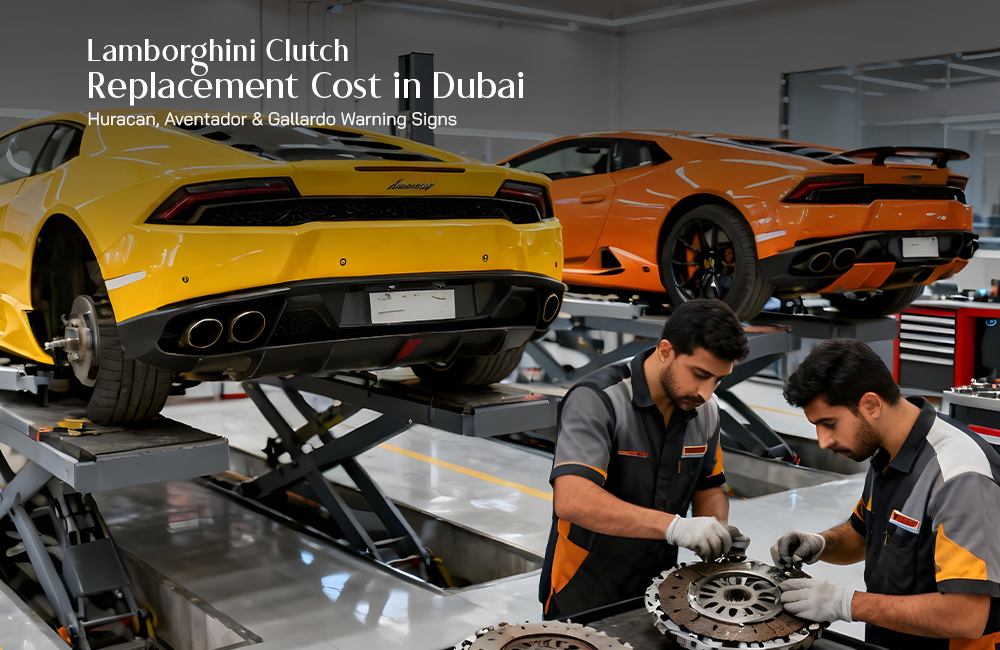
Lamborghini clutch replacement costs in Dubai range from approximately AED 22,000 for a Gallardo manual to AED 90,000+ for an Aventador ISR full clutch and flywheel replacement. Costs vary by model, clutch system type, parts sourcing, and workshop rates. Labor typically represents 40–55% of the total bill.
Maintenance Tips to Prolong Your Lamborghini's Clutch Life
Driving Habits: Why "Creeping" in Dubai Traffic Kills Your Clutch
The most significant thing a Dubai Lamborghini owner should do is to avoid driving the car in a lot of urban traffic. Each creeping maneuver creates clutch slip. When possible, opt for an alternative daily driver under the stop-and-go traffic and make sure you reserve your Lamborghini for driving on the highway or weekend outings. If you must drive in urban conditions, then select "Corsa" or "Sport" mode (rather than "Strada/Auto") on E-Gear models. This will reduce the frequency of microslips by enhancing the shift response.
The Role of Regular PIS (Point of Initial Slippage) Adjustments
When a new clutch is installed after the installation, the ECU has to be calibrated on the newly installed friction disc's bite points. This is known as the PIS (Point of Initial Slippage) calibration. When the friction disc wears down over time, PIS could shift, leading to the system over-slip when engaged. Regular PIS calibration (recommended every 5,000-8,000 km for E-Gear systems) ensures smooth engagement and minimizes wear. It's a fast and inexpensive procedure that many owners do not bother with.
Maintaining the Cooling System to Prevent Gearbox Overheating
Check that the transmission cooler is operating properly and that the coolant lines are clear and free of obstruction. For the Aventador, it is the ISR system's insufficient cooling capacity that makes this particularly crucial in the climate of Dubai. Upgrading to a larger cooler for the transmission is a good decision for owners who use their Aventador often in cities. Be sure to inspect the fluid conditions at each service. A degraded fluid deteriorates in its heat transfer properties and ceases to protect the internal friction surfaces.